The Zones of Regulation is an internationally recognised approach that supports children in understanding and managing their emotions, a skill known as self-regulation.
Self-regulation is sometimes referred to as self-control, impulse management, or self-management. It can be best described as being in the right state of alertness for a particular situation. For example, a child taking part in a sports game needs a higher level of alertness than when they are working quietly in a library.
At times, everyone—including adults—finds it difficult to manage strong emotions such as worry, anger, restlessness, fear, or tiredness. When these feelings become overwhelming, they can make it harder to cope with everyday activities. For children, this often affects their ability to concentrate and learn in school. The Zones of Regulation helps children develop practical strategies to manage these emotions, enabling them to return to a calm, focused state that supports learning. These strategies are known as self-regulation skills.
Why are we using them?
At Broadfield, we use different approaches to help children understand and manage their emotions, depending on their age and stage of development.
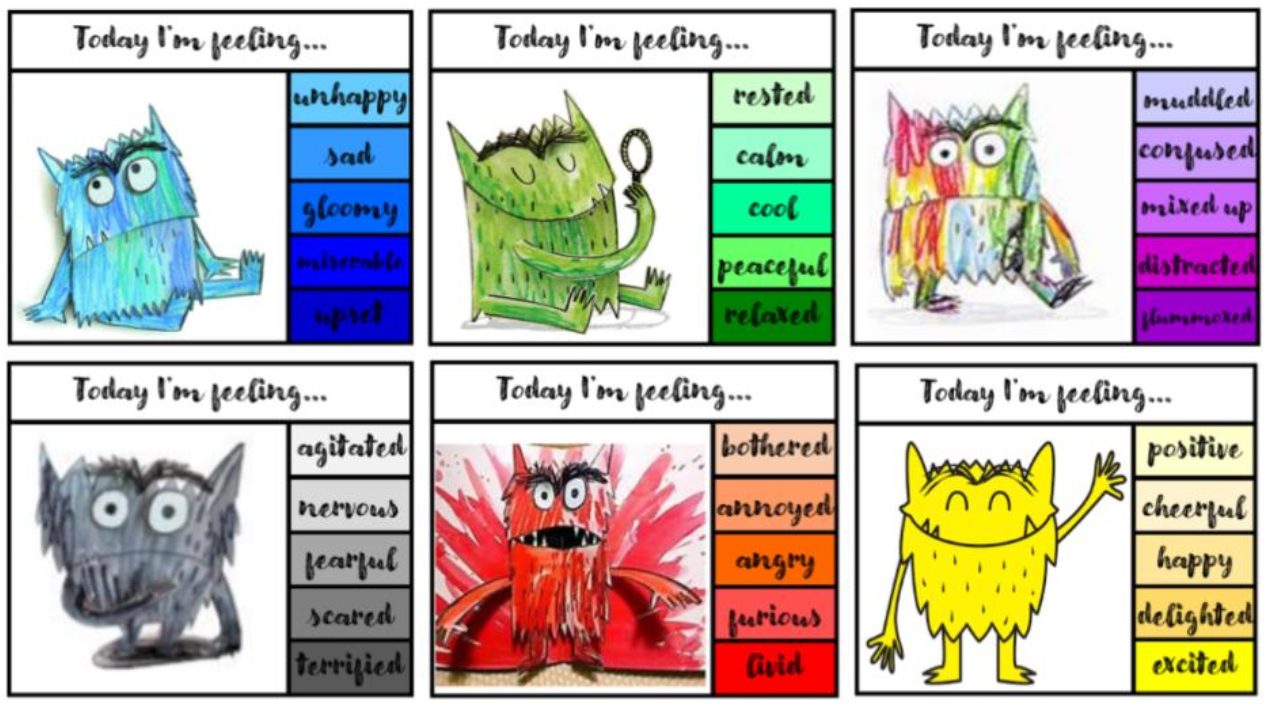
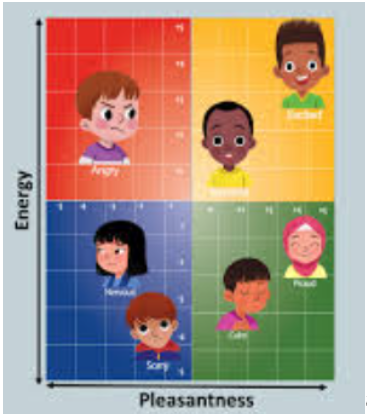
In EYFS we initially use The Colour Monster to support children in recognising and talking about their feelings. As we progress through the Think Equal scheme Reception the mood meter is introduced. This links closely to the zones of regulation which is used in KS1.
Children learn that emotions can be described using colours, such as feeling happy, sad, angry, calm, or worried. This helps younger children to name their feelings and understand that all emotions are normal and okay to feel.
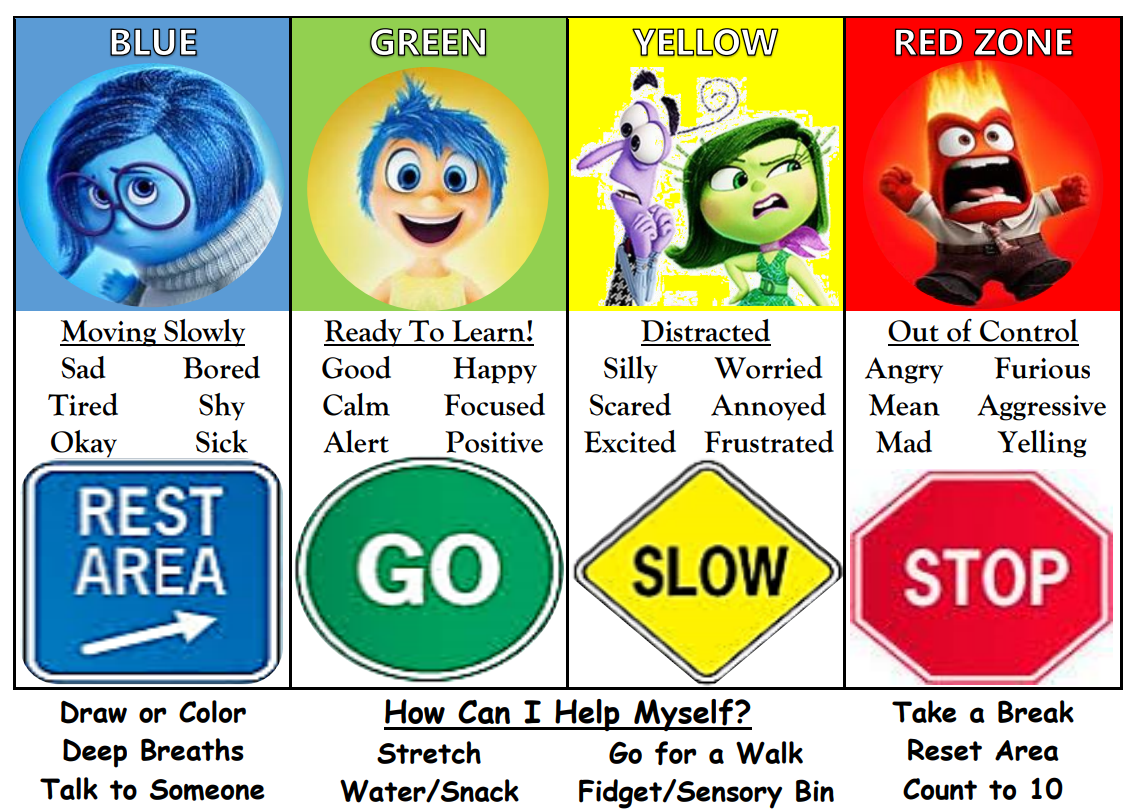
In KS2, we use the Zones of Regulation. Children are taught that everyone experiences all of the Zones and that no Zone is “bad” or “naughty.” Each Zone is a normal part of everyday life and is expected at different times. For example, being in the Blue Zone can be helpful when a child is tired or getting ready to sleep.
Across all year groups, we help children understand that feelings can change throughout the day and that learning how to manage emotions is an important life skill.
Supporting Children to Manage Their Emotions
We support children in learning practical strategies to help them manage strong emotions such as anger, worry, or sadness. These strategies may include:
- Taking a short break
- Getting a drink of water
- Using calming movements or breathing
- Using a fidget or sensory tool
Younger children may need adults to suggest, model, and practise these strategies with them, while older children are encouraged to identify strategies that have helped them before.
Over time, children learn which strategies work best for them. This helps them to feel calmer, more confident, and ready to learn, both in school and beyond.
Over time, children learn which strategies work best for them. This helps them to feel calmer, more confident, and ready to learn, both in school and beyond.
What are the Different Zones?
- Blue Zone: low level of arousal; not ready to learn; feels sad, sick, tired, bored, moving slowly.
- Green Zone: calm state of alertness; optimal level to learn; feels happy, calm, feeling okay, focused.
- Yellow Zone: heightened state of alertness; elevated emotions; has some control; feels frustrated, worried, silly/wiggly, excited, loss of some control.
- Red Zone: heightened state of alertness and intense emotions; not an optimal level for learning; out of control; feels mad/angry, terrified, yelling/hitting, elated, out of control.
We will be teaching children that everyone experiences all of the Zones of Regulation and that no Zone is considered “bad” or “naughty.” Each Zone is a normal part of everyday life and is expected at different times. For example, being in the Blue Zone can be helpful when a child is tired or getting ready to sleep.
We will also support children in learning practical strategies to help them manage strong emotions such as anger, worry, or sadness. These strategies may include simple actions like taking a short break, getting a drink, using calming movements, or using a fidget tool. Older children may be able to identify strategies that have helped them before, while younger children may need adults to suggest and practise different techniques with them. Over time, children will learn which strategies work best for them, helping them to feel calmer, more in control, and ready to learn.
How can you help your child with the Zones of Regulation?
- Identify your own feelings using Zones language in front of your child (e.g.: I’m frustrated. I think I am in the Yellow Zone.”)
- Talk about what tool you will use to be in the appropriate Zone (e.g.: “I need to take four deep breaths to help get me back to the Green Zone.”)
- At times, wonder which Zone your child is in. Or, discuss which Zone a character in a film / book might be in. (e.g.: “You look sleepy. Are you in the Blue Zone?”)
- Engage your child in discussion around Zones when they are in the Red Zone is unlikely to be effective. You need to be discussing the different Zones and tools they can use when they are more regulated / calm.
- Teach your child which tools they can you. (eg: “It’s time for bed. Let’s read a book together in the comfy chair to get you in the Blue Zone.”)
- Regular Check-ins. “How are you feeling now?” and “How can you get back to Green?”
- Modelling It is important to remember to show the children how you use tools to get back to the green zones. You might say “I am going to make myself a cup of tea and do some breathing exercises because I am in the blue zone” and afterwards
- Share how their behaviour is affecting your Zone. For example, if they are in the Green Zone, you could comment that their behaviour is also helping you feel happy / go into the Green Zone.
- Put up and reference the Zones visuals and tools in your home.
- Praise and encourage your child when they share which Zone they are in.